
The Infrastructure Behind a Global Welcome: Monterrey Welcomes the World with a More Connected, Secure, and Innovative Airport
- With modernization underway and no interruption of operations, Monterrey International Airport welcomes visitors to the FIFA World Cup 2026™.
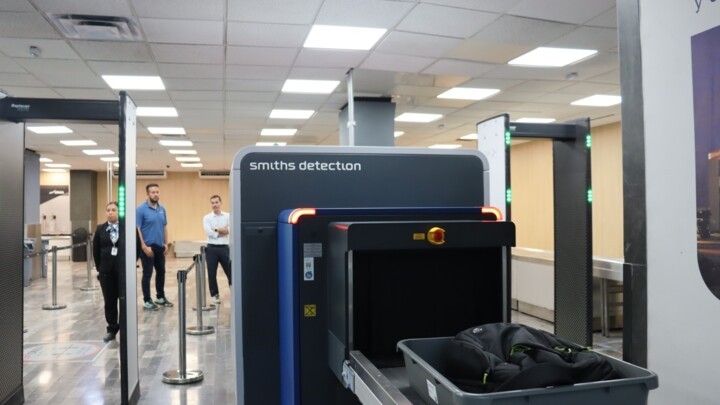
- State-of-the-art 3D Computed Tomography Inspection Technology already in use.
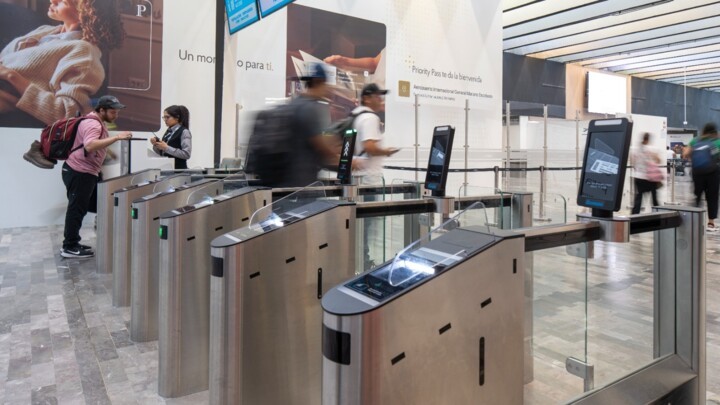
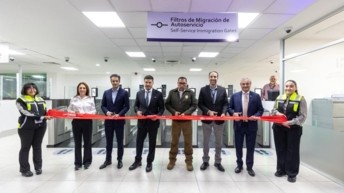
- Automated processes, such as Self Bag Drop and e-gates, reduce travel times.
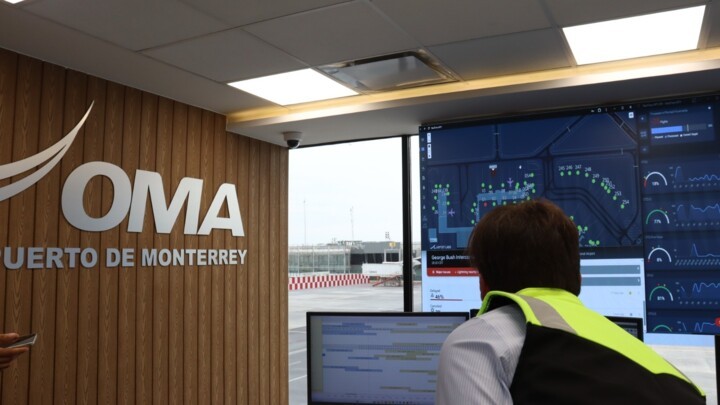
- A new Operations Control Center coordinates flights, passengers, and services in real-time to efficiently manage peak demand during the World Cup.
Monterrey, N.L., June 10, 2026 – As the FIFA World Cup 2026™ approaches, Monterrey International Airport is prepared to welcome thousands of domestic and international visitors arriving in the city to enjoy one of the world’s most important sporting events.
While construction of new infrastructure continues to progress, the airport operates uninterrupted, 24 hours a day, 365 days a year, catering to nearly 16 million passengers annually and completing more than 130,000 air operations per year. Against this backdrop—and in anticipation of the arrival of thousands of visitors for the FIFA World Cup 2026™—OMA has strengthened its capabilities, delivering innovative solutions that are already in place and offering passengers a more efficient, secure, and seamless experience.
"We are building the airport of the future without stopping operations in the present. We understand that construction can lead to temporary adjustments for our users, but it is also the visible manifestation of a profound transformation that is already delivering tangible benefits for those traveling through Monterrey," said Ricardo Dueñas, CEO of Grupo OMA.
Technology Already Improving the Passenger Experience
As part of this transformation, Monterrey International Airport is utilizing cutting-edge tools that streamline passenger transit and enhance safety standards. Beyond security enhancements, this modernization translates into more agile and digital processes at key moments in the travel experience:
Self Bag Drop: Self-service kiosks that multiply the number of baggage check-in positions, minimizing process time to just a few minutes.
E-gates: Automated gates expedite access to security checkpoints using QR codes from boarding passes.
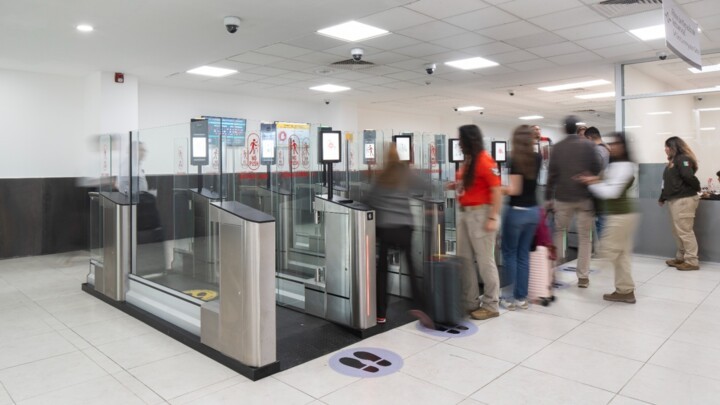
Biometric Passport Scanning: Collaborating with Mexico’s National Institute of Migration, biometric passport readers verify identities in real-time and accept e-passports from 30 countries for faster processing.
Operations Control Center: A state-of-the-art facility consolidates technology, personnel, and processes to real-time monitor flights, aircraft, vehicles, and passenger flows. This coordination ensures swift responses to contingencies and peak demand periods.
Recently, HI-SCAN 6040 CTiX equipment utilizing three-dimensional Computed Tomography (CT) technology—among the most advanced solutions in airport inspection worldwide—was deployed. Passengers no longer need to remove laptops, liquids, gels, or electronic devices from their luggage during security screening, significantly speeding up the process and improving the overall travel experience. This technology is already operational at Terminal A and will soon be implemented at Terminal C.
Prepared to Operate Under High Demand
OMA has launched a new Operations Control Center, integrating real-time data on flights, passengers, aircraft, and airport services. This enables the efficient coordination of airport operations, bolstering the ability to handle peak demand periods, improving passenger flow management, and ensuring safe and orderly operation during high-demand events like the World Cup.
The Operations Control Center serves as the "brain" of airport operations: it brings together technology, personnel, and processes under one roof to anticipate bottlenecks, reallocate resources, and resolve incidents before they escalate. Whether addressing weather disruptions or simultaneous flight arrivals, this centralized visibility enables quicker decision-making and immediate collaboration with airlines, aeronautical, migration, and security authorities, as well as other strategic partners within the airport community. The center operates as part of a broader digital transformation deployed across OMA’s network.
The result? An airport not only capable of handling the extraordinary traffic of the World Cup but of doing so while maintaining the service quality passengers expect, with reduced waiting times, smoother passenger flows, and dynamic adjustments to match demand in real-time.
Beyond the World Cup
Current developments are part of a long-term vision to solidify Monterrey International Airport as the principal air hub of northern Mexico. A historic investment of 8 billion pesos is allocated to Monterrey International Airport between 2025 and 2030, as part of a multi-year program totaling 16 billion pesos across OMA’s entire network.
This investment will expand terminals, modernize processes, integrate new technologies, and enhance international connectivity, ensuring Monterrey is ready to welcome the world for the FIFA World Cup 2026™ while establishing the infrastructure to support economic, tourism, and logistics growth across the region in the coming decades.
In preparation for the tournament, the airport will reinforce signage and deploy information kiosks to guide domestic and international visitors. Additionally, the Passenger Experience Committee will continue its work on optimizing key operational processes.
"We remain committed to transforming the travel experience in Monterrey with infrastructure and technology meeting the highest industry standards. The World Cup is an important milestone, but the investment is designed for sustained growth in the coming years. We are building, together with passengers, authorities, and partners, the airport of the future: larger, more comfortable, safer, and more connected," emphasized Ricardo Dueñas, CEO of Grupo OMA.
Grupo Aeroportuario del Centro Norte, S.A.B. de C.V., known as OMA, operates 13 international airports in nine states of central and northern Mexico. OMA’s airports serve Monterrey, Mexico’s third largest metropolitan area, the tourist destinations of Acapulco, Mazatlán, and Zihuatanejo, and nine other regional centers and border cities. OMA also operates the NH Collection Hotel inside Terminal 2 of the Mexico City airport and the Hilton Garden Inn at the Monterrey airport. OMA employs over 1,200 persons in order to offer passengers and clients airport and commercial services in facilities. OMA is listed on the Mexican Stock Exchange (OMA) and on the NASDAQ Global Select Market (OMAB). Since December 2022, OMA is part of VINCI Airports, the world´s leading private airport operator.